
How Solar PV Design & Drafting Services in Australia Reduce Project Costs and Delays
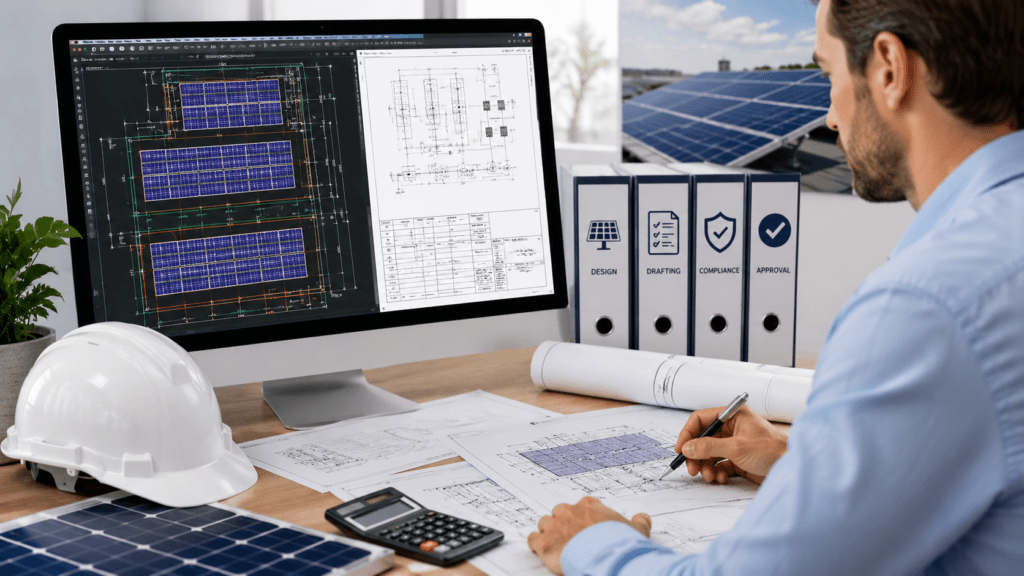
A solar installer rarely loses money because the panels were wrong.
They lose money because a network connection application got rejected over an incomplete single-line diagram. Because a roof-mount layout did not account for structural loading and had to be redone on-site. Because a council asked for revised plans halfway through a commercial install, pushing the whole project back by weeks.
None of these problems come from bad solar equipment. They come from documentation that was not done properly the first time. This is exactly why solar PV design & drafting services in Australia matter so much more than most people realise before they have been burned by a delay.
Where Solar Projects Actually Lose Time and Money
Before getting into how proper design and drafting services help, it is worth being clear about where the real costs sit in a typical solar project.
Rejected or delayed network connection applications - Distribution network service providers (DNSPs) require accurate technical documentation before approving a grid connection, including single-line diagrams and system specifications. Incomplete or inaccurate documentation means resubmission, and resubmission means weeks added to a project timeline.
Structural issues discovered too late - A roof-mount solar array adds real load to a structure. If this is not properly assessed and documented at the design stage, problems can surface during installation - at which point fixing it costs far more in labour and materials than getting it right on paper first.
Council and compliance delays - Some solar installations, particularly larger commercial systems, require council approval or compliance documentation beyond the standard structural connection process. Incomplete plans mean a request for more information, and that request means your project sits in a queue while the clock keeps running.
Rework on-site - When a system layout was not properly thought through on paper, installers end up making decisions on the roof that should have been settled in the design phase. This slows down installation and increases the chance of errors that are expensive to correct afterward.
Every one of these issues traces back to the same root cause: design and documentation that was rushed, incomplete, or handled by someone without the right technical depth.
What Proper Solar PV Design & Drafting Actually Covers
Solar PV design and drafting is not just drawing where the panels go. A complete, properly executed package covers several distinct technical areas.
System layout and array design - Mapping out exactly where panels, inverters, and associated equipment sit, accounting for roof orientation, shading, and available space to maximise energy yield.
Single-line and connection diagrams - The technical documentation that shows how the system connects electrically, which is what network providers and certifying electricians rely on to assess and approve a connection.
Structural assessment and mounting details - Confirming the roof or ground-mount structure can safely support the additional load, and documenting exactly how the mounting system is installed.
Compliance documentation aligned with Australian Standards - Solar PV installations in Australia need to align with the relevant AS/NZS standards covering the design and installation of PV arrays and grid connection of energy systems. Getting this right the first time avoids back-and-forth with assessors and certifiers.
Site-specific plans - Generic templates do not account for the specific roof shape, shading conditions, or structural quirks of an individual site. Proper drafting reflects the actual site, not an approximation of it.
At SolidCAD, we design high-performance solar PV systems for residential, commercial, and industrial use, with our expertise focused on maximising energy yield, cost savings, and long-term sustainability for every project we work on.
How Getting This Right the First Time Saves Real Money
The financial case for proper solar PV design and drafting comes down to avoiding the costs that show up later when documentation is incomplete or inaccurate.
Fewer resubmissions mean faster project completion. Every round of revision and resubmission with a network provider or certifying body adds time, and time on a project is money - whether that is in labour standing idle, finance costs accruing, or a client growing frustrated with delays.
Accurate structural documentation avoids on-site surprises. Discovering a structural issue during installation, rather than during design, almost always costs more to resolve. Materials may need to be reordered, additional labour brought in, or the installation schedule pushed back while a fix is engineered.
Properly detailed plans reduce installer error. When installers have a complete, accurate, site-specific plan to work from, there is less guesswork on-site. Less guesswork means fewer mistakes, and fewer mistakes means less rework.
Standards-compliant documentation moves through approval processes faster. Drawings prepared in line with the relevant Australian Standards and DNSP requirements from the outset are far less likely to trigger queries or rejections than documentation assembled quickly without that compliance focus built in.
Why This Matters More for Commercial and Industrial Projects
Residential solar installations are relatively straightforward in scale, but commercial and industrial projects multiply the consequences of poor documentation significantly.
A commercial rooftop array involves more panels, more complex structural configurations, and often more stringent structural requirements given the scale of the installation. A single documentation error on a small residential job might cost a few days. The same type of error on a large commercial project can cost weeks and a meaningfully larger sum in delayed revenue or contractual penalties.
This is part of why our solar PV design work spans residential, commercial, and industrial applications - the underlying principles of careful, accurate, compliant design apply across all three, but the stakes of getting it wrong scale up significantly as project size increases.
Why Working With Australian-Based Drafting Specialists Matters
Solar PV documentation needs to reflect Australian regulatory requirements specifically - the relevant AS/NZS standards, DNSP-specific connection requirements, and where applicable, local council conditions. A team unfamiliar with these specifics is more likely to produce documentation that needs correction later.
At SolidCAD, our drafting process is carried out by qualified, accredited specialists based in Australia, which means clear communication and a genuine understanding of local compliance requirements throughout the process. Our work is never outsourced overseas, and we use industry-leading CAD platforms including AutoCAD, SolidWorks, and Revit to produce plans that are accurate and ready for review, fabrication, or construction.
We also offer flexibility depending on what a project needs - whether that is a single one-off design package or ongoing drafting support for a business handling multiple solar projects over time.
A Practical Approach to Avoiding Delays From the Start
If you want to minimise the risk of costly delays on a solar project, a few practical steps make a real difference:
Engage proper design and drafting expertise early, rather than treating documentation as an afterthought once the equipment has already been ordered.
Confirm structural requirements before finalising a layout, particularly for larger commercial roof-mount systems where load calculations matter significantly.
Make sure single-line diagrams and connection documentation are accurate and complete before submission to a network provider, since incomplete submissions are one of the most common sources of project delay.
Work with a team that understands Australian Standards and local DNSP requirements specifically, rather than generic international templates that may not reflect what is actually required here.
Get Your Solar PV Project Designed Right the First Time
The cost of proper solar PV design and drafting is almost always smaller than the cost of fixing problems caused by documentation that was rushed or incomplete. Getting it right the first time means fewer delays, fewer rejected applications, and a smoother path from design through to installation.
At SolidCAD, our team of Australian-based, accredited specialists delivers solar PV design & drafting services in Australia built for accuracy, compliance, and long-term value. Get in touch today for a free consultation and quote on your next solar PV project.